
How to Decide Which Signs Your Business Needs
October 1, 2026
What Is Your Signage Telling Visitors?
A visitor pulls into the parking lot and looks for the right entrance. Inside, they pause in a hallway and scan for reception. Later, they walk past a display that could have introduced a product they came to see.
Each moment calls for a different kind of sign. Yet the question often begins, “What sign should we order?” To decide which signs your business needs, start with the experience people have at your location. Where do they hesitate? What should they see, understand, or do next?
The signs your business needs depend on the journey
No universal checklist fits every business. A showroom, medical office, corporate campus, and retail store all have different priorities. The best signage plan follows the path a visitor takes, from finding the building to leaving with the right impression.
Here are five questions to ask as you walk through that path.
1. Can people find you before they reach the door?
First, look at your location from the road or parking area. Can someone identify the building without already knowing where to go? If several businesses share a property, will they know which entrance is yours?
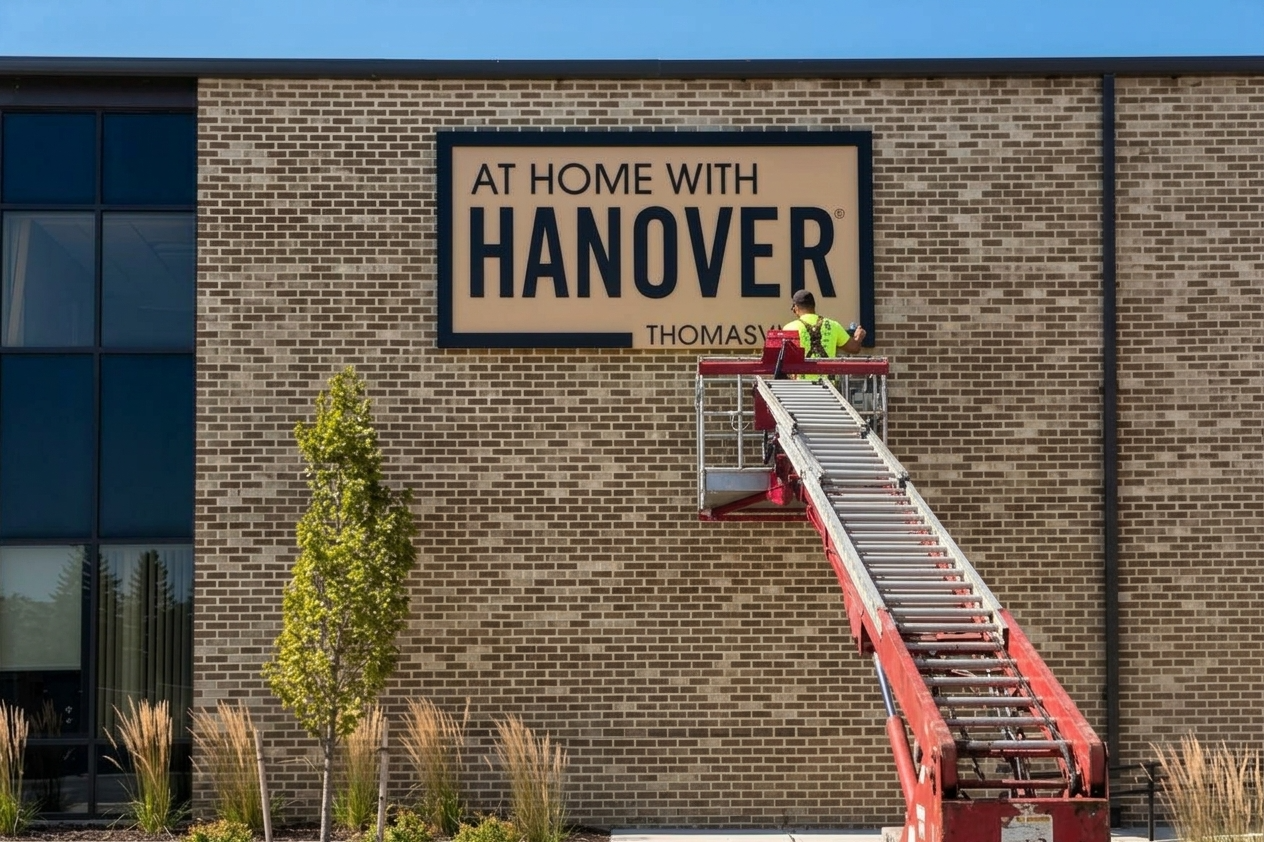
For Hanover Architectural Products, Caskey produced and installed an exterior sign at its Thomasville Residential Design Center. The sign identifies the building and helps visitors spot the indoor showroom. In the cover photo, it sits high on the brick facade. Its position and scale matter as much as the design itself.
The “At Home with Hanover” message introduces the brand before visitors step inside. Its prominent lettering illustrates why exterior signage requires more than choosing a logo and a size. The finished sign needs to communicate clearly within the building’s surroundings and from the visitor’s approach.
The right outdoor sign depends on the building, approach, and distance from which people will view it. The International Sign Association also offers a resource on sign visibility and legibility.
2. Where do visitors stop to look for direction?
Finding the entrance is only the first step. Once inside, people may need to locate reception, a department, a meeting room, or the next hallway. Watch where they pause. Those moments often reveal where directional signage would help.
Your staff can tell you where the confusion happens. Do they answer the same “Where do I go?” question every day? Do visitors follow a sign and still end up at the wrong door? A clearer message or better placement may solve more than adding another sign.
Caskey’s indoor signage includes wayfinding and lobby options. When a sign identifies a permanent room or directs people through a facility, review the applicable accessibility requirements. The U.S. Access Board’s guide to signs explains how requirements differ by sign type.
3. What do you want people to notice?
Not every sign needs to give directions. Some introduce your brand, explain a service, or highlight a product. A lobby wall graphic can set the tone for a visit. A retail display can bring a timely offer into view.
Think about what visitors are doing when they pass that spot. Are they waiting, moving quickly, or comparing products? Give them a message they can absorb in that moment. A graphic can look impressive and still miss its purpose if people never have time to read it.
These pieces should work together across the space. Caskey’s article on environmental graphic design explores how brand and navigation can shape one connected experience.
4. Which messages will need to change?
A building name may stay in place for years. A promotion, department location, or featured product may change much sooner. Before producing signage, separate the lasting messages from the ones your team updates often.
Consider seasonal campaigns, changing visitor routes, and new services. Where does your team currently tape up temporary notices? Where do old signs linger after information changes? Those are clues that the space needs a more flexible way to communicate.
This matters for consistency, too. If the website promises one experience but the signs show an older name or offer, visitors receive mixed messages.
5. Will the sign work where it will be installed?
A design can look clear on a screen and disappear on the wall. Lighting, viewing angle, building materials, and nearby graphics all affect what people see. Installation access matters as well, especially in an occupied business.
Look again at Hanover’s sign. The brick facade, mounting height, and surrounding windows form the setting in which visitors see it. Reviewing these details early helps a signage team connect the artwork to the actual installation location.
Bring photos of the space into the planning conversation. Show the route people take and the surfaces available. Note any existing signs that must come down. This helps the team consider the finished environment, not only the artwork. Caskey’s onsite installation team can bring the approved plan into that setting.
Start with the experience you want to improve
The most useful signage plan begins with a specific problem: visitors cannot spot the building, find reception, or notice an important offering. Walk the route they take and write down where the experience breaks down. Then decide what each sign needs to accomplish.
Hanover’s exterior sign offers a simple example. Its job is to identify the design center and help people find the showroom. Your priorities may be different, but the first step is the same: define the job before choosing the sign.
Ready to take a closer look at your signage? Contact Caskey to discuss your space and the experience you want to create.
Related Posts
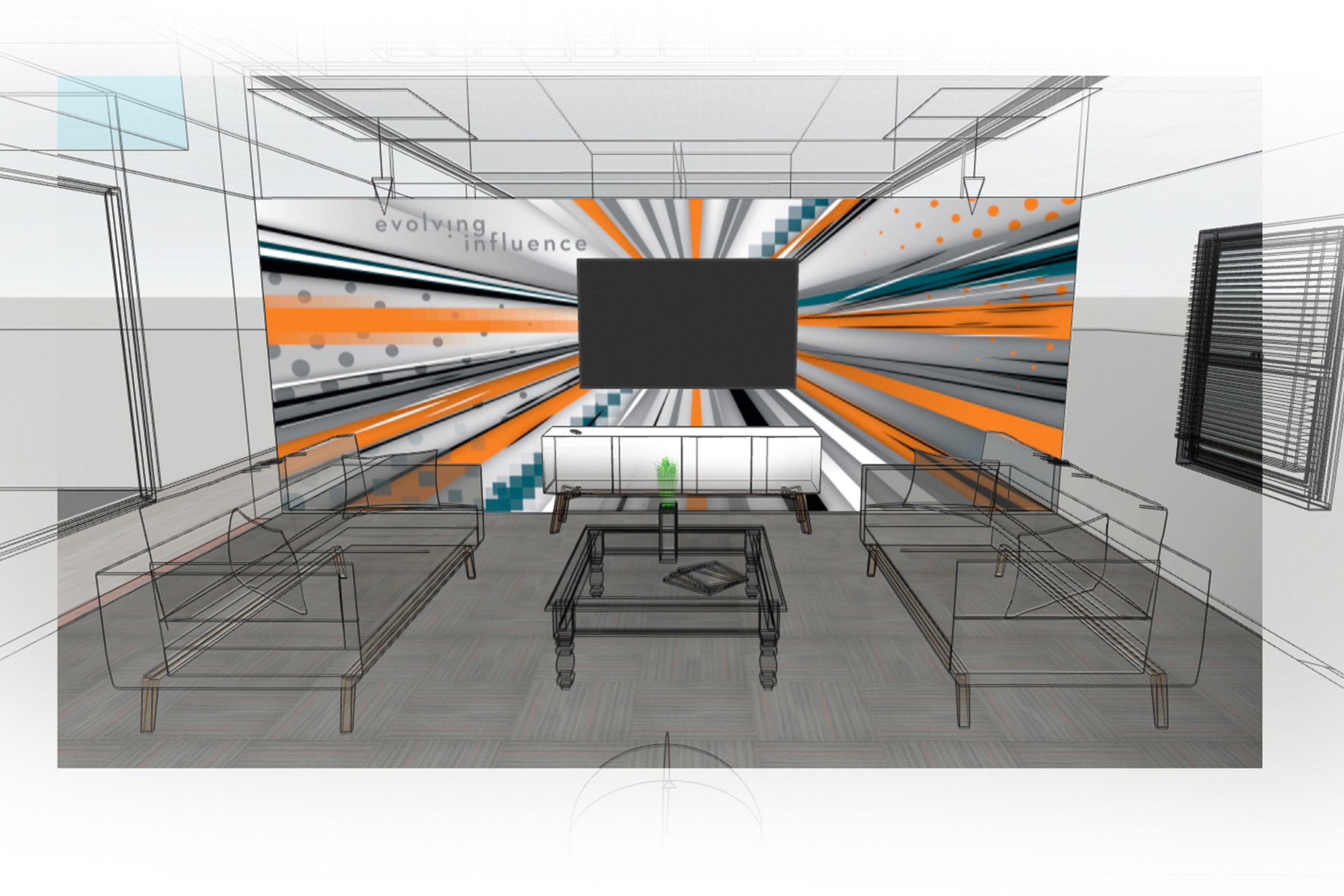
From Brand to Building: The Strategic Role of Environmental Graphic Design Signage Q&A

Indoor and Outdoor Signage That Speaks Before You Do